
Most dropshipping stores fail on product choice before anything else. A product can look exciting in a supplier catalogue and still be a poor fit: too cheap to make money, too fragile to ship, or sold by a thousand other stores at the same price.
Run every product through these twelve checks before you list it. If it fails more than two or three, move on.
Demand
1. Do people search for it?
Use a keyword tool, marketplace search suggestions or Google Trends to see whether people look for the product or for the problem it solves. Steady demand is better than a sudden spike that disappears in a month.
2. Is someone already selling it successfully?
Competitors that have been selling the product for a while are evidence of demand. No competitors at all usually means no market.
3. Does it fit your niche?
Every product should make sense next to the others in your store. A focused range builds trust and makes marketing cheaper.
Money
4. Is the margin big enough?
Subtract the supplier price, supplier shipping, dropship fee and payment fees from your planned selling price. What is left has to pay for marketing and still leave a profit. Low-priced items rarely work unless they are sold in bundles.
5. Can you raise the order value?
Accessories, refills, bundles and related products increase what each customer spends. Products with natural add-ons are easier to make profitable.
6. Will customers buy it again?
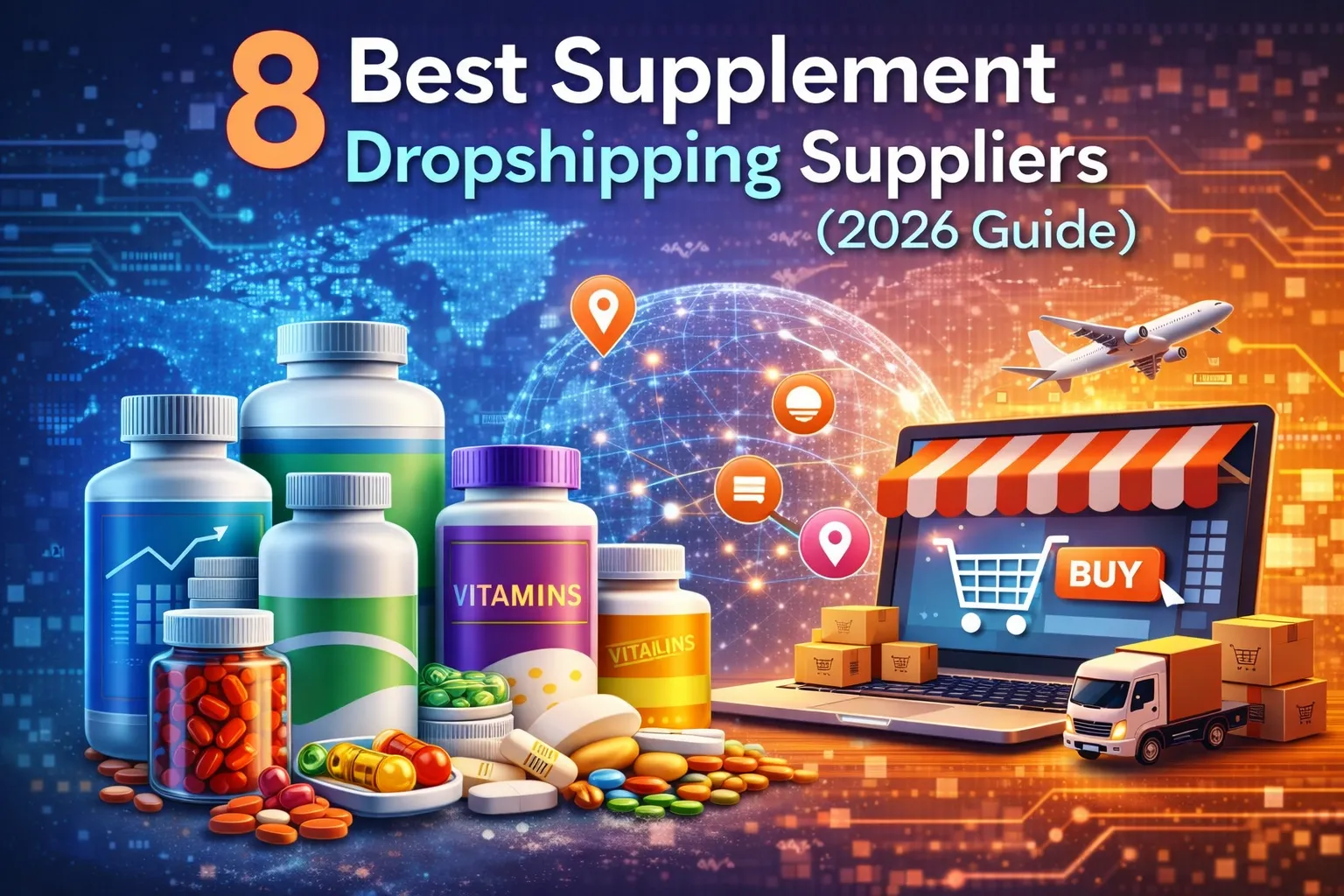
Consumables such as supplements, cosmetics, coffee and pet food bring repeat orders without new marketing costs. See for example health and supplement suppliers or pet suppliers.
Shipping and risk
7. Is it easy to ship?
Fragile, oversized, heavy or temperature-sensitive products cost more to ship and come back damaged more often. If you do sell bulky items, use suppliers that specialise in them, such as furniture manufacturers with their own dropship programmes.
8. How fast can it reach your customers?
Check where the supplier ships from and their real delivery times. Our directory lets you filter suppliers by location, for example USA or Europe.
9. Are there legal or safety issues?
Avoid products that need certifications you cannot verify, that make health claims, or that use brand names and characters without a licence. Electrical items, children’s products and cosmetics have specific safety rules in most markets.
10. Is it likely to be returned?
Products with sizing, colour or fit issues have higher return rates. Plan for that in your price or provide very precise size information.
The supplier
11. Is the supplier reliable?
Look at how long they have been in business, whether they sync stock levels, how they handle damaged items and whether they ship without their own branding. Order a sample and time the delivery.
12. Can you make the listing better than everyone else’s?
If you will use the same photos and description as every other store, you are competing on price alone. Products where you can add value, with your own photos, a detailed guide or a better explanation, are much easier to sell.
A quick scoring method
Give each check a score of 0 (fails), 1 (acceptable) or 2 (strong). Products scoring 18 or more out of 24 are worth testing. Below 14, look for something else. The scores are not scientific, but they force you to look at each product the same way instead of choosing by excitement.
Where to find products to check
Start with suppliers that match your niche in the Dropshipping Deal directory: each listing shows the categories they cover, where they ship from, their fees and their integrations. Then read the types of drop shippers to understand how each kind of supplier affects price and delivery.