
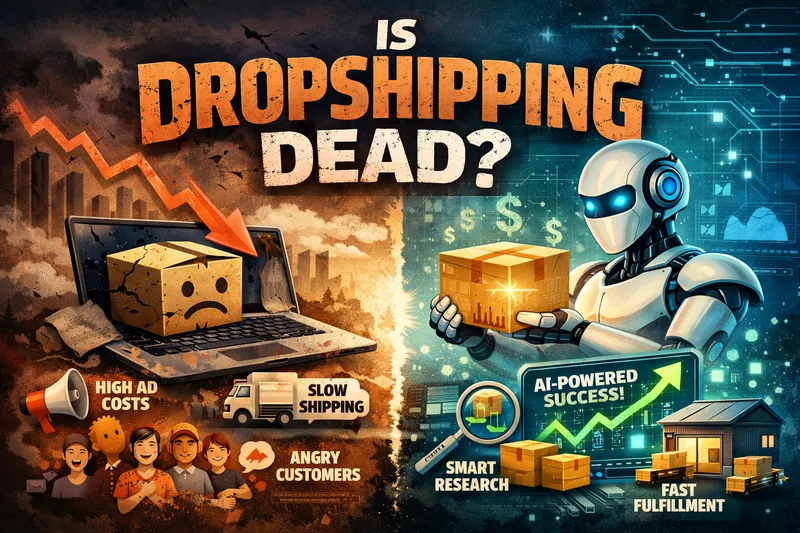
Is Dropshipping Dead?
For more than a decade, dropshipping has been promoted as one of the easiest ways to start an online business: low upfront costs, no inventory, and global reach. But in recent years, the narrative has changed. Rising advertising costs, intense competition, slower shipping times, and increasingly demanding customers have led many to ask a blunt question: Is dropshipping dead?
The short answer is no — but it has changed dramatically. And the biggest force reshaping it today is Artificial Intelligence (AI).
This article explores all sides of the debate, from critics who say dropshipping is no longer viable to proponents who believe AI is ushering in a new, more professional era for the model.
Why People Say Dropshipping Is Dead
Let’s start with the arguments behind the pessimism — and they’re not unfounded.
1. Market Saturation
Traditional dropshipping models relied heavily on selling generic products sourced from the same suppliers, often using identical product descriptions and creatives. Today:
Thousands of stores sell the same items
Price competition is brutal
Differentiation is minimal
This has made it far harder for beginners to stand out.
2. Rising Advertising Costs
Paid traffic — especially on social platforms — has become significantly more expensive. The old formula of:
“Run Facebook ads → test products → scale fast”
…no longer works reliably without strong margins, branding, and optimisation.
3. Customer Expectations Have Changed
Consumers now expect:
Fast shipping
Clear communication
Easy returns
Brand trust
Long delivery times and poor support — once tolerated — now damage conversion rates and brand reputation.
4. Platform and Policy Pressure
Marketplaces, ad platforms, and payment providers have tightened rules:
Stricter ad approvals
More scrutiny on misleading claims
Higher standards for customer experience
For many low-effort dropshipping stores, this has been the final blow.
Why Dropshipping Is Not Dead
Despite these challenges, dropshipping itself is not obsolete. What is dead is lazy dropshipping.
1. Dropshipping Is a Fulfilment Model, Not a Business Model
At its core, dropshipping is simply a way to fulfil orders without holding inventory. Major brands and retailers still use dropshipping — but as part of a broader, well-structured business:
Strong branding
Unique value propositions
Quality suppliers
Customer-first mindset
The problem was never dropshipping — it was how it was used.
2. Niche and Value-Driven Stores Still Thrive
Stores that:
Solve specific problems
Target clear niches
Offer bundled value, content, or expertise
…continue to succeed, even with dropshipping-based fulfilment.
The Role of AI in Modern Dropshipping
This is where the conversation truly changes. AI is redefining what’s possible in dropshipping — and separating amateurs from professionals.
1. Product Research and Validation
AI tools can now:
Analyse trends across marketplaces and social media
Predict demand patterns
Identify underserved niches
Estimate competition and pricing viability
This dramatically reduces guesswork and costly trial-and-error.
2. Smarter Marketing and Advertising
AI-driven systems help:
Generate and optimise ad creatives
Personalise messaging for different audiences
Predict which creatives are likely to convert
Allocate ad budgets more efficiently
Instead of burning money on broad testing, marketers can act with data-driven precision.
3. Conversion Rate Optimisation (CRO)
AI-powered analytics and heatmapping tools:
Detect friction points in the checkout
Optimise product pages dynamically
Personalise offers based on user behaviour
This means higher profitability without increasing traffic.
4. Customer Support and Retention
AI chatbots and assistants now handle:
Order tracking
FAQs
Returns and refunds
Upselling and cross-selling
Available 24/7, they reduce support costs while improving customer satisfaction — a critical factor in long-term success.
5. Supply Chain and Pricing Intelligence
Advanced AI tools can:
Monitor supplier performance
Predict delays or stock issues
Adjust pricing dynamically based on demand, costs, and competition
This brings dropshipping closer to the operational efficiency of traditional retail.
The New Reality: From “Get Rich Quick” to Real Business
AI hasn’t made dropshipping easier — it has made it more professional.
What no longer works:
One-page stores with copied descriptions
Generic ads and fake scarcity
Zero brand identity
What works today:
Brand-led dropshipping
AI-assisted decision-making
High-quality content and storytelling
Customer experience as a priority
In other words, dropshipping is no longer a shortcut — it’s a business model that rewards skill, strategy, and technology.
So, Is Dropshipping Dead?
No. But the old version is.
Dropshipping without:
Research
Differentiation
Brand trust
Data and AI support
…is increasingly unsustainable.
However, dropshipping powered by AI, focused on value, branding, and long-term customer relationships, is not only alive — it’s evolving into a more resilient and scalable model.
Final Thoughts
AI is not killing dropshipping.
It’s exposing weak businesses and empowering strong ones.
For entrepreneurs willing to adapt, learn, and leverage AI responsibly, dropshipping remains a valid — and potentially very powerful — way to build an online business in 2026 and beyond.